
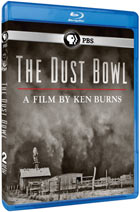
| Studio | PBS |
| Catalog Number | DUS600B |
| MPAA Rating | Not Rated |
| Retail Price | $29.99 |
| Disc Type | Single Side, Dual Layer (BD-50) |
| Running Time | 228 min |
| Color | B/W With Color Sequences |
| Chapters | Yes |
| Closed Captioned | Yes |
| Regional Coding | A |
| Release Date | 11/20/12 |
| Theatrical Year | 2012 |
| Director | Ken Burns |
| Screenplay | Subscribers only |
| Story | Subscribers only |
| Music | Subscribers only |
| Cinematography | Subscribers only |
| Production Design | Subscribers only |
| Costume Design | Subscribers only |
| Editor | Subscribers only |
| Sound Editor | Subscribers only |
| Re-Recording Mixer | Subscribers only |
| Executive Producer | Subscribers only |
| Producer | Subscribers only |
| Aspect Ratio | Subscribers only |
| Measured Ratio | Subscribers only |
| Photography | Subscribers only |
| Disc Soundtrack | Dolby Digital 5.1 |
| Theatrical Sound | Subscribers only |
| Subtitles | Subscribers only |
Subscribe for full specs and review text.
Subscribe Free"The Dust Bowl" chronicles the worst man-made ecological disaster in American history, when a frenzied wheat boom on the southern Plains, followed by a decade-long drought during the 1930s, nearly swept away the breadbasket of the nation. Menacing black blizzards killed farmers' crops and livestock, threatened the lives of their children, and forced thousands of desperate families to pick up and move somewhere else. Vivid interviews with more than two dozen survivors of those hard times, combined with dramatic photographs and seldom-seen movie footage, bring to life stories of incredible human suffering and equally incredible human perseverance. (Tricia Spears)
Ken Burns' epic PBS documentary "The Dust Bowl" is a historical perspective and story about the homesteading movement, which began in 1862 with the Homestead Act enacted by President Lincoln. It is a story of how the federal government offered the landless white citizens of America part-ownership of the country by giving them 160 acres of frontier land, free, if they produced on it income for themselves and their families for a period of five years. This was their first chance to own land, at the time the significant capital asset. Driven by their desire to enrich themselves and their families, they strained the vast hundreds of millions of prairie land acres, not realizing the manmade environmental disaster that were causing. Burns only casually mentions the Homestead Act and its significance and otherwise concentrates on the environmental consequences of man's overweening human ambition, heedlessness and greed. The lessons learned have enable this vast land to remain productive but the initial period was disastrous.
The proposed Capital Homestead Act (CHA) (www.capitalhomestead.org) takes its lead from the Homestead Act of 1862. In Lincoln's America of nearly 150 years ago, the problem confronting the vast majority of the citizens of our nation was that most people owned no land (capital). Today, the major problem for the vast majority of the people of our nation and of our world, for that matter, is that 99 percent of the people own no capital (or a viable share) in a high-tech, capital-intensive economy. The Capital Homestead Act would make it possible for every American to become a viable owner of productive capital and not just for the tiny elite who now own our corporations. The slogan of the Capital Homestead Act is "Own Or Be Owned." The Capital Homestead Act's summary can be found at http://www.cesj.org/homestead/summary-cha.htm and at http://www.cesj.org/about/programs/declarations/ monetaryjustice.htm. (Gary Reber)
This Content Is Available To Subscribers Only
If you are a current subscriber, please log in. Otherwise, subscribe for free.